What Did Trump Say About the Pope? Full Story Explained
What did Trump say about the Pope? Read the full story of Trump’s clash with Pope Leo XIV over Iran, the backlash, and what the Bible teaches about peace and leadership.
The clash between President Donald Trump and Pope Leo XIV in April 2026 has become one of the most discussed intersections of faith and politics in recent memory. For Christians around the world, the exchange raises important questions about the role of the church in public life, the biblical call to peacemaking, and how believers should respond when political and spiritual authority come into conflict.
Understanding what Trump said about the Pope — and what the Pope said in return — matters not because of the politics involved but because of the deeper spiritual principles at stake. This article presents the facts of the situation and then examines what Scripture teaches about the themes at the heart of this controversy.
Key Facts About the Trump and Pope Leo XIV Clash
| Attribute | Details |
|---|---|
| Date of Trump’s Post | Sunday, April 12, 2026 |
| Platform | Truth Social |
| Pope | Pope Leo XIV (first American-born pope, elected May 2025) |
| Trigger | Pope Leo’s criticism of the Iran war and Trump’s threats against Iran |
| Trump’s Key Phrases | “WEAK on Crime,” “terrible for Foreign Policy,” “not a big fan” |
| Pope’s Response | “I have no fear of the Trump administration” |
| Controversy | Trump posted an AI image depicting himself as a Jesus-like figure |
| Backlash | Criticism from Catholic bishops, Christian commentators, and political allies |
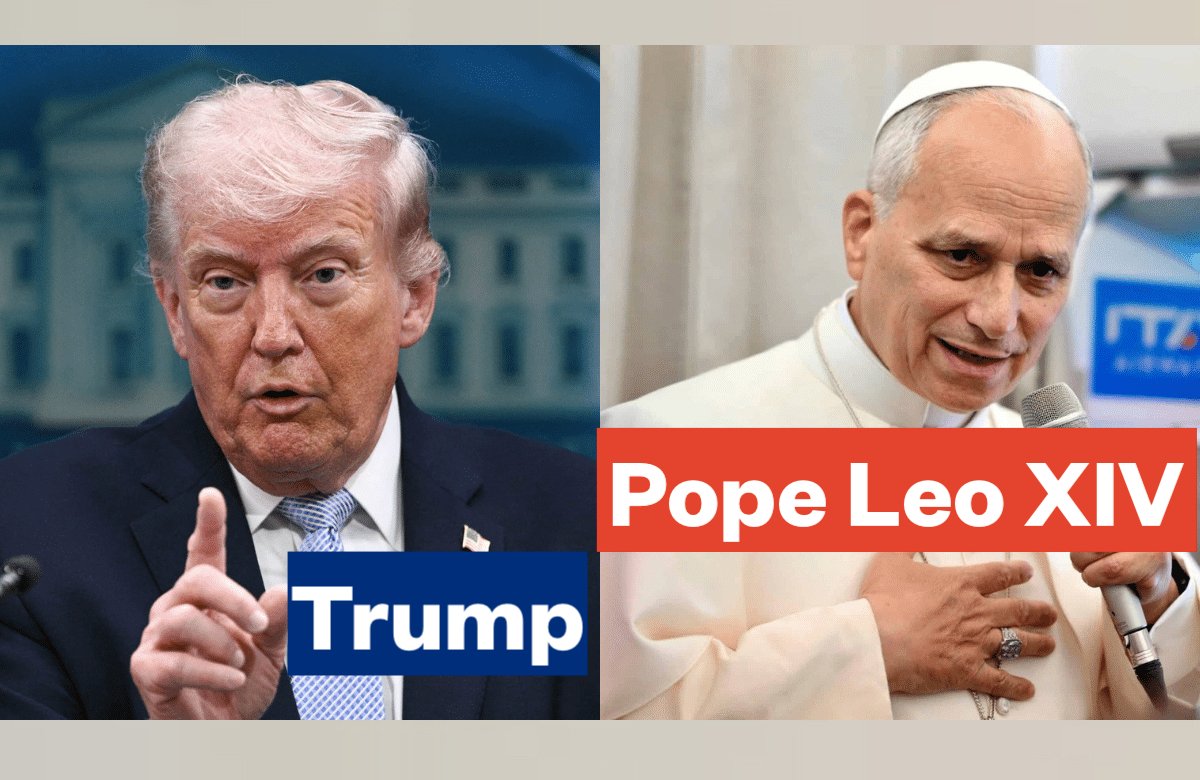
What Trump Said About Pope Leo XIV
The dispute began after Pope Leo XIV held a prayer vigil for peace on April 11, 2026, during which he spoke against what he described as a “delusion of omnipotence” fuelling the ongoing conflict in Iran. Days earlier, Pope Leo had called Trump’s threat that “a whole civilization will die tonight” as “truly unacceptable.”
Trump responded on his Truth Social platform with a lengthy post attacking the Pope directly. He accused Pope Leo of being “WEAK on Crime, and terrible for Foreign Policy” and urged him to “get his act together as Pope, use Common Sense, stop catering to the Radical Left, and focus on being a Great Pope, not a Politician.” Trump added that Pope Leo’s stance was “hurting him very badly and, more importantly, it’s hurting the Catholic Church.”
Speaking to reporters later that evening, Trump went further, stating that he was “not a big fan of Pope Leo” and describing him as “a very liberal person.” He also claimed, without evidence, that the Pope supported Iran having nuclear weapons — a claim that fact-checkers have found to be false, as Pope Leo has consistently spoken against all weapons of war.
The controversy deepened when Trump posted an AI-generated image on Truth Social showing himself in biblical-style robes, appearing to lay hands on a sick man with light emanating from his fingers. The image drew immediate and widespread condemnation, with many Christians — including prominent conservative voices — calling it blasphemous. Trump later deleted the image and told reporters he had thought it depicted him as a doctor, not as Jesus.
How Pope Leo XIV Responded to Trump’s Criticism
Pope Leo’s response was measured but firm. Speaking to journalists aboard the papal plane on his way to Algeria for an 11-day tour of Africa, the Pope said he had “no fear of the Trump administration, or speaking out loudly about the message of the Gospel.” He clarified that his appeals for peace were not political attacks but reflections of the church’s mission, stating, “We are not politicians. We do not look at foreign policy from the same perspective that he may have.”
The Pope also said he did not wish to enter a personal debate with the president, adding, “The message has always been the same: to promote peace — and I say this for all world leaders, not just him.” He vowed to continue speaking against war and promoting dialogue between nations.
The head of the United States Conference of Catholic Bishops, Archbishop Paul Coakley, said he was “disheartened” by Trump’s comments, noting that “Pope Leo is not his rival; nor is the Pope a politician.” Italian Prime Minister Giorgia Meloni, a conservative ally of Trump, issued a rare rebuke, calling it “right and normal” for the head of the Catholic Church to call for peace and condemn war.
What the Bible Says About Peacemaking and Conflict
At the centre of this controversy is a tension that Scripture addresses directly: the call to pursue peace and the responsibilities of those in authority. Regardless of one’s political views, the Bible offers clear guidance on how believers should think about these issues.
Matthew 5:9 (KJV) records Jesus saying, “Blessed are the peacemakers: for they shall be called the children of God.” Peacemaking is not a political position — it is a spiritual identity. Those who work for peace reflect the character of God, who is Himself described as the God of peace in Romans 15:33. Pope Leo’s appeals for peace, whatever one thinks of his broader theology, align with this fundamental biblical principle.
At the same time, Romans 13:1 (KJV) teaches that “the powers that be are ordained of God” and that governing authorities carry a God-given responsibility. Political leaders face complex decisions about national security, justice, and the protection of their citizens. Christians can acknowledge the weight of those decisions while still holding leaders accountable to moral principles rooted in Scripture.
The tension between these truths is not new. Throughout biblical history, prophets confronted kings, and spiritual leaders spoke truth to political power — sometimes at great personal cost. Nathan rebuked David (2 Samuel 12). Elijah stood against Ahab (1 Kings 18). John the Baptist challenged Herod (Mark 6:18). The pattern in Scripture is clear: God’s word does not bow to political convenience, and those who speak it faithfully should not be silenced by fear of earthly power.
What the Bible Teaches About How Leaders Should Speak
Another dimension of this story is the language used. Trump’s public attacks on the Pope — calling him weak, terrible, and liberal — raise the question of how Scripture expects leaders, and indeed all believers, to communicate, even in disagreement.
Proverbs 15:1 (KJV) teaches, “A soft answer turneth away wrath: but grievous words stir up strife.” The Bible consistently warns against harsh, reckless speech. James 3:5-6 (KJV) compares the tongue to a fire, warning that it can cause immense destruction when used carelessly. Public figures carry an even greater responsibility because their words reach millions and shape public discourse.
Ephesians 4:15 (KJV) instructs believers to speak “the truth in love.” It is possible to disagree — even strongly — while maintaining respect and dignity. Disagreement does not require personal attack, and strength is not measured by how harshly one speaks about an opponent. True strength, according to Proverbs 16:32 (KJV), belongs to the one who “is slow to anger” and who “ruleth his spirit” better than one who conquers a city.
Pope Leo’s response modelled a different approach. Rather than retaliating with personal insults, he reaffirmed his mission, clarified his position, and refused to be drawn into a war of words. 1 Peter 3:9 (KJV) counsels, “Not rendering evil for evil, or railing for railing: but contrariwise blessing.” Whether or not one agrees with the Pope’s theological or political positions, his restrained response reflected a biblical pattern of responding to hostility with composure.
The Controversy Over the AI Image and What Scripture Says About Reverence
The AI-generated image that Trump posted — depicting himself in robes with light emanating from his hands as he appeared to heal a sick man — touched a nerve among Christians of all backgrounds. Many saw it as a depiction of the president in the likeness of Jesus Christ, and the backlash was swift. Conservative commentator Megan Basham called it “OUTRAGEOUS blasphemy.” Even Vice President JD Vance acknowledged that “a lot of people weren’t understanding his humor in that case.”
Whether the image was intended as humour, symbolism, or something else, Scripture speaks clearly about the reverence due to God alone. Exodus 20:3-4 (KJV) establishes the first and second commandments: “Thou shalt have no other gods before me. Thou shalt not make unto thee any graven image.” While an AI-generated social media post is not a graven image in the Old Testament sense, the underlying principle remains — nothing and no one should be elevated to the place that belongs to God alone.
Isaiah 42:8 (KJV) declares, “I am the Lord: that is my name: and my glory will I not give to another.” Christians have always understood that depicting any human being in the likeness of Christ — particularly in a context of political messaging — crosses a line that Scripture draws firmly. The image of Christ is sacred, and associating it with political power, regardless of intent, is something believers rightly take seriously.
How Christians Should Respond to Political and Religious Disputes
For the average believer reading headlines about what Trump said about the Pope, the question is not simply “who is right?” but “how should I respond as a follower of Christ?” Scripture offers practical guidance.
First, 1 Thessalonians 5:21 (KJV) instructs believers to “prove all things; hold fast that which is good.” Christians are called to discernment, not blind loyalty to any political figure or religious leader. Evaluate what is said against what Scripture teaches, and hold fast to truth regardless of who speaks it.
Second, 1 Timothy 2:1-2 (KJV) urges believers to pray “for kings, and for all that are in authority; that we may lead a quiet and peaceable life in all godliness and honesty.” Prayer — not outrage, not partisan commentary — is the Christian’s first response. Pray for President Trump, for Pope Leo, and for all leaders entrusted with influence over people’s lives.
Third, avoid letting political controversy divide the body of Christ. Ephesians 4:3 (KJV) calls believers to endeavour to keep “the unity of the Spirit in the bond of peace.” Christians will hold different political views, and that is natural. But the unity of the church must not be sacrificed on the altar of political allegiance. Our identity in Christ is deeper and more enduring than any election cycle or news headline.
Standing on God’s Word in Every Season
The clash between Trump and Pope Leo XIV will eventually fade from the headlines, but the biblical principles it has surfaced will remain relevant for as long as faith and politics intersect — which is to say, always. Christians are called to be peacemakers, to speak truth with love, to pray for their leaders, and to guard against elevating any human being to the place reserved for God alone.
Whatever your political convictions, let Scripture be the final authority in how you think, speak, and act. Micah 6:8 (KJV) offers a timeless summary of what God requires: “He hath shewed thee, O man, what is good; and what doth the Lord require of thee, but to do justly, and to love mercy, and to walk humbly with thy God?” Justice, mercy, and humility — these are the marks of a life anchored in God’s word, regardless of what any president or pope may say.
FAQs About What Trump Said About the Pope
Trump accused Pope Leo XIV of being “WEAK on Crime, and terrible for Foreign Policy” in a Truth Social post on April 12, 2026. He also told reporters he was “not a big fan of Pope Leo” and described him as “a very liberal person.” The comments came after the Pope criticised Trump’s threats against Iran and called for peace.
The dispute was triggered by Pope Leo XIV’s public criticism of the Iran war and specifically his description of Trump’s threat against Iran’s civilisation as “truly unacceptable.” Trump viewed the Pope’s statements as political interference and responded with personal attacks.
Pope Leo said he had “no fear of the Trump administration” and that he would continue speaking out for peace as part of his Gospel mission. He declined to enter a personal debate with the president, stating, “We are not politicians.”
Trump posted an AI-generated image on Truth Social depicting himself in biblical-style robes, appearing to heal a sick man with light emanating from his hands. Many Christians, including conservative commentators, called it blasphemous. Trump later deleted the image and claimed he had thought it showed him as a doctor.
Scripture records numerous instances of spiritual leaders confronting political rulers, from Nathan rebuking King David to John the Baptist challenging Herod. The Bible teaches that God’s word holds authority over all earthly power, and those who proclaim it should do so faithfully and without fear, while also maintaining respect and love even in disagreement.
Christians are called to evaluate all statements against the standard of Scripture rather than aligning with any figure based on political loyalty. The Bible instructs believers to pray for all leaders, pursue peace, speak truth in love, and maintain unity within the body of Christ regardless of political differences.